
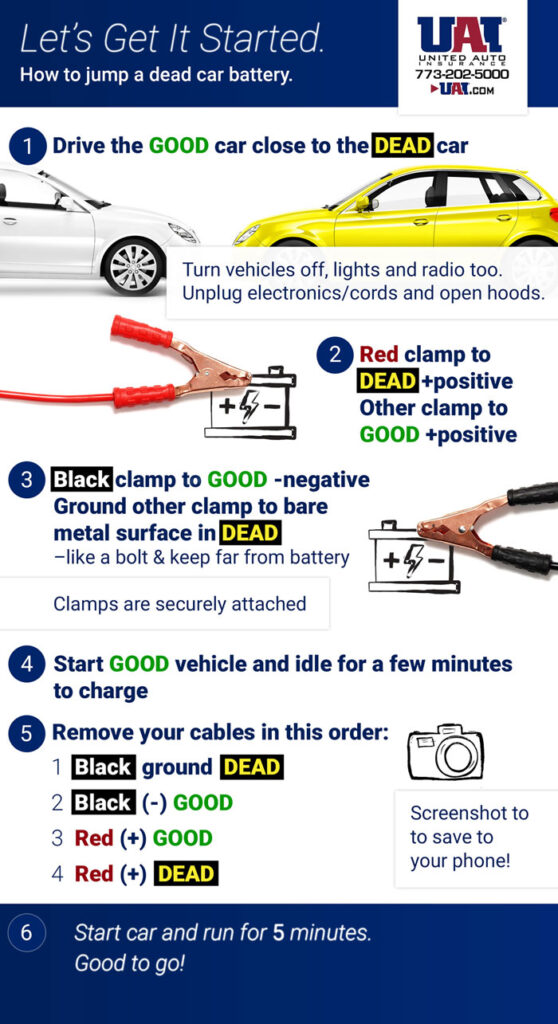
A dead car battery can be a real inconvenience, leaving you stranded and frustrated. Luckily, jump-starting your car is a relatively simple process that can get you back on the road in no time. This guide will walk you through the steps of jump-starting your car safely and effectively.
We’ll cover everything from identifying a dead battery to connecting the jumper cables correctly, as well as some troubleshooting tips for when things don’t go as planned. By the end of this article, you’ll be confident in your ability to jump-start your car and avoid the stress of a dead battery.
Jump-Starting a Car
Jump-starting a car involves transferring electrical energy from a fully charged battery to a discharged battery. This provides the necessary boost to start the engine. The process relies on jumper cables, which act as conductors to bridge the two batteries.
Once the cables are connected, the engine of the donor vehicle (the one with the good battery) is started. This allows the electrical current to flow through the cables and into the discharged battery, giving it enough power to crank the engine of the vehicle with the dead battery.
Safety Precautions

Before attempting to jump-start your car, it’s crucial to prioritize safety. Here are some essential precautions to keep in mind:
- Wear safety glasses: Battery acid can be corrosive and cause serious eye damage.
- Wear gloves: Protect your hands from battery acid and electrical sparks.
- Ensure both vehicles are off: Turn off the ignition and remove the keys from both vehicles.
- Park vehicles safely: Park the vehicles close enough for the jumper cables to reach, but avoid touching each other.
- Check for loose connections: Inspect the battery terminals for corrosion or looseness.
Jumper Cable Connection
Connecting the jumper cables correctly is essential for a successful jump-start. Follow these steps:
- Red to positive: Connect one red cable clamp to the positive (+) terminal of the dead battery.
- Red to positive: Connect the other red cable clamp to the positive (+) terminal of the good battery.
- Black to negative: Connect one black cable clamp to the negative (-) terminal of the good battery.
- Black to ground: Connect the other black cable clamp to a clean, unpainted metal surface on the vehicle with the dead battery (this acts as a ground).
Identifying a Dead Battery

A dead battery can manifest in several ways. Here are some common signs:
- Slow engine crank: The engine turns over slowly when you try to start it.
- Dim headlights: The headlights appear dimmer than usual.
- Clicking sound: You hear a clicking sound when you turn the key in the ignition.
- Dashboard warning light: The battery warning light on your dashboard may illuminate.
Troubleshooting Jump-Start Issues
If you encounter difficulties jump-starting your car, consider these troubleshooting tips:
- Check connections: Ensure the jumper cables are securely connected to both batteries and the ground point.
- Try another vehicle: If possible, try jump-starting your car with a different vehicle that has a good battery.
- Inspect battery terminals: Look for corrosion or looseness on the battery terminals. Clean them with a wire brush and baking soda solution if necessary.
- Consider a battery replacement: If your battery is old or frequently dies, it may be time for a replacement.
Conclusion
Jump-starting a car can be a lifesaver when you find yourself with a dead battery. By following these steps and prioritizing safety, you can successfully jump-start your vehicle and get back on the road. Remember to always consult your vehicle’s owner’s manual for specific instructions and recommendations.

