
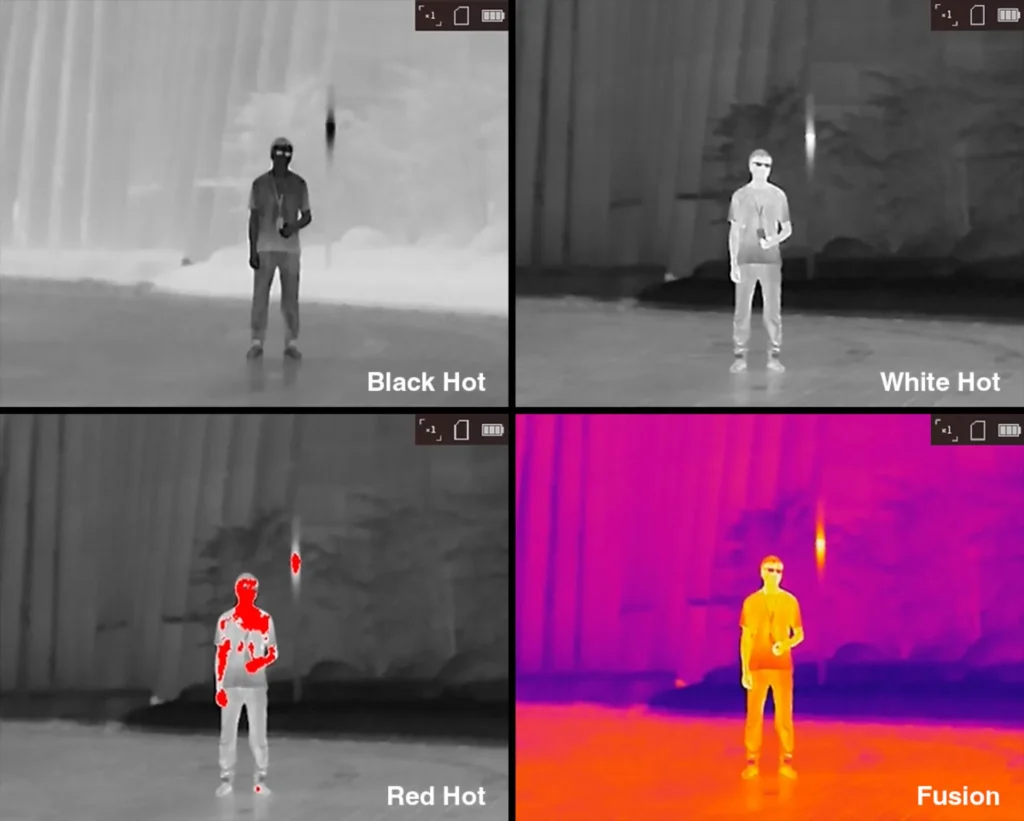
Black and white thermal imagery offers a unique perspective on the world, revealing hidden details and temperature variations that are invisible to the naked eye. This captivating contrast allows us to see beyond the visible spectrum and delve into the realm of heat signatures. By capturing infrared radiation, black and white thermal technology paints a vivid picture of temperature differences, transforming our understanding of the environment around us.
This article will explore the fascinating world of black and white thermal imagery, delving into its principles, applications, and the remarkable insights it provides. We’ll examine how black and white thermal cameras capture infrared radiation, translate it into visual representations, and ultimately allow us to visualize temperature variations with unprecedented clarity.
Black and White Thermal Imagery
Black and white thermal imagery utilizes a specialized type of camera that detects infrared radiation emitted by objects. Unlike traditional cameras that capture visible light, black and white thermal cameras are sensitive to the heat energy radiating from all surfaces. This allows them to create images based solely on temperature differences, resulting in a striking contrast of shades of gray.
The intensity of each shade corresponds to the object’s temperature. Hotter objects appear brighter, while cooler objects appear darker. This unique representation provides valuable information about the thermal properties of objects and their surroundings.
Black and white thermal imagery is particularly useful in situations where visibility is limited or traditional cameras are ineffective. It can penetrate smoke, fog, and darkness, revealing hidden details that would otherwise remain obscured.
Hidden Heat Signatures
One of the most compelling aspects of black and white thermal imagery is its ability to reveal hidden heat signatures. These signatures represent areas of concentrated heat energy, often indicating concealed objects, activities, or anomalies.
For example, a person’s body heat will appear as a distinct bright spot in a black and white thermal image, even if they are camouflaged against their surroundings. Similarly, electrical equipment can generate heat signatures that reveal potential malfunctions or overheating issues.
By identifying these hidden heat signatures, black and white thermal imagery provides valuable insights for various applications, including security surveillance, search and rescue operations, and industrial inspections.
Temperature Variations
Black and white thermal imagery excels at capturing subtle temperature variations within a scene. This ability to visualize minute differences in heat allows us to gain a deeper understanding of the environment and identify patterns that might otherwise go unnoticed.
For example, black and white thermal images can reveal air currents flowing over surfaces, detect leaks in insulation, or pinpoint areas of uneven heating in buildings. These insights are invaluable for optimizing energy efficiency, identifying potential problems, and improving overall performance.
Infrared Radiation
At the heart of black and white thermal imagery lies the phenomenon of infrared radiation. All objects with a temperature above absolute zero emit infrared radiation, a form of electromagnetic energy invisible to the human eye.
The amount of infrared radiation emitted by an object is directly proportional to its temperature. Hotter objects emit more infrared radiation than cooler objects. Black and white thermal cameras are specifically designed to detect this infrared radiation and convert it into visual representations.
Visualize Temperature Differences
The power of black and white thermal imagery lies in its ability to visualize temperature differences with remarkable precision. By translating infrared radiation into shades of gray, these cameras create a clear and intuitive representation of the thermal landscape.
This visualization allows us to quickly identify hot spots, cold zones, and areas of significant temperature variation. The contrast between bright and dark shades highlights these differences, making it easy to discern subtle variations that would be difficult or impossible to detect with traditional methods.
Conclusion
Black and white thermal imagery offers a unique and powerful perspective on the world, revealing hidden details and temperature variations that are invisible to the naked eye. By capturing infrared radiation and translating it into visual representations, black and white thermal technology unlocks a new realm of understanding, enabling us to see beyond the visible spectrum and gain valuable insights into our surroundings. From security surveillance to industrial inspections, black and white thermal imagery has become an indispensable tool across diverse fields, empowering us to make informed decisions based on precise temperature data.
For more in English: 10 Interesting Facts About Octopus
For more in English: Nature Curiosities