
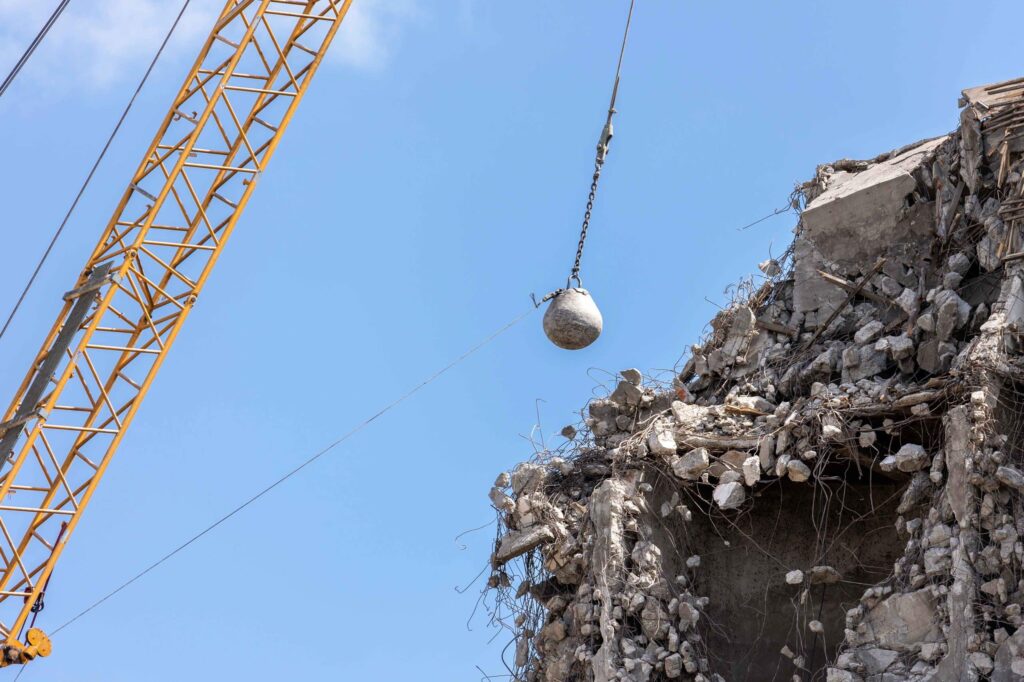
Wrecking balls, those massive spheres swinging from cranes, are more than just nostalgic symbols of demolition. They remain a vital tool in the construction and demolition industry, efficiently dismantling large structures for new developments or removing unwanted buildings. While modern technology offers alternative methods, the raw power and simplicity of a wrecking ball continue to make it a popular choice for many projects.
This article delves into the world of wrecking balls, exploring their diverse applications, efficiency in demolition, technological advancements influencing their use, and the crucial role of operator expertise. We’ll uncover why these seemingly archaic tools remain relevant and effective in today’s construction landscape.
Wrecking Ball Applications
Wrecking balls are incredibly versatile tools with a wide range of applications across various demolition projects. Their primary function is to demolish large structures like buildings, bridges, and industrial facilities. The sheer force of the swinging ball can shatter concrete, brick, and steel, effectively reducing massive structures to rubble.
Beyond traditional demolition, wrecking balls find use in specialized tasks. They can be employed for controlled dismantling of sensitive structures where precision is paramount, minimizing damage to surrounding areas. Additionally, they are used to clear debris and obstacles from construction sites, preparing the ground for new developments.
The adaptability of wrecking balls extends to different environments. While commonly seen on land-based projects, they can also be utilized in marine demolition scenarios, dismantling offshore platforms or removing sunken vessels. This versatility makes them a valuable asset for diverse demolition needs.
Demolition Efficiency
Wrecking balls are renowned for their efficiency in demolition projects. Their ability to deliver concentrated force with each swing allows for rapid dismantling of structures. Compared to other methods like explosives or mechanical excavators, wrecking balls can often complete demolition tasks faster and more cost-effectively.
The simplicity of operation also contributes to their efficiency. A skilled operator can maneuver the wrecking ball with precision, targeting specific areas for maximum impact. This targeted approach minimizes collateral damage and reduces the overall time required for demolition. Furthermore, the use of a wrecking ball often eliminates the need for extensive scaffolding or other support structures, further streamlining the process.
Technological Advancements
While the fundamental principle of a wrecking ball remains unchanged, technological advancements have enhanced its capabilities and safety. Modern wrecking balls are equipped with advanced hydraulic systems that allow for precise control over swing speed and force. This increased precision minimizes collateral damage and improves overall efficiency.
Furthermore, the integration of computer-aided design (CAD) and simulation software has revolutionized the planning and execution of demolition projects involving wrecking balls. Operators can now virtually simulate the demolition process, identifying potential hazards and optimizing the sequence of swings for maximum effectiveness. These technological advancements have made wrecking ball operations safer, more efficient, and more precise.
Operator Expertise
Despite technological advancements, the success of a wrecking ball operation hinges on the expertise of the operator. Skilled operators possess a deep understanding of physics, mechanics, and demolition techniques. They can accurately assess structural weaknesses, predict the trajectory of the swinging ball, and execute precise maneuvers to dismantle structures safely and efficiently.
Operator training programs emphasize both theoretical knowledge and practical experience. Trainees learn about the different types of wrecking balls, their operating mechanisms, safety protocols, and best practices for various demolition scenarios. Experienced operators often specialize in specific types of projects, honing their skills through years of hands-on experience.
Conclusion
Are wrecking balls still used today? Absolutely. These iconic tools remain a vital part of the construction and demolition industry, proving their enduring relevance despite technological advancements. Their raw power, efficiency, versatility, and adaptability to various projects make them an indispensable asset for demolition professionals. While technology continues to evolve, the skill and expertise of operators remain crucial in harnessing the full potential of wrecking balls, ensuring safe and effective demolition operations.
For more in English: 10 Interesting Facts About Octopus
For more in English: Nature Curiosities