
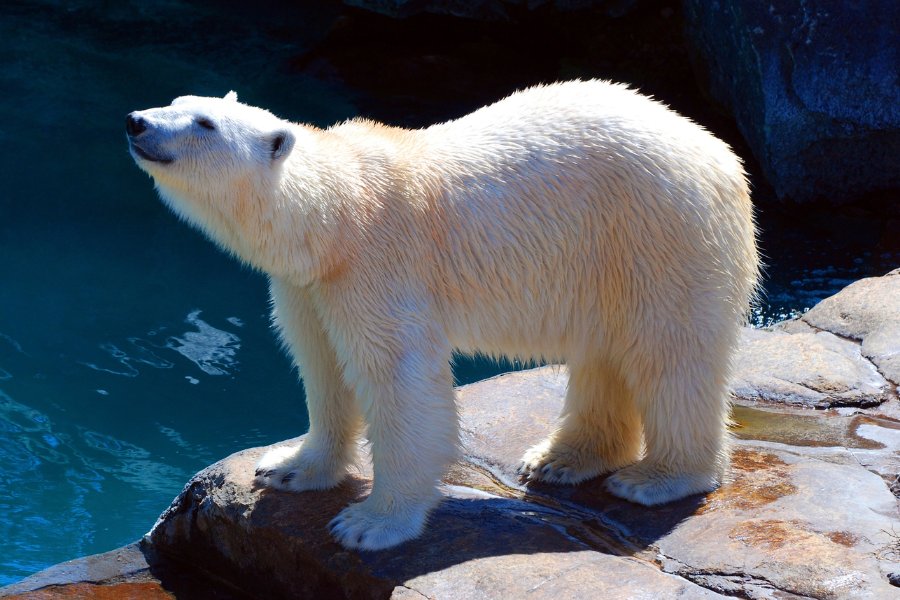
Polar bears are iconic symbols of the Arctic, renowned for their strength and resilience in one of Earth’s harshest environments. These magnificent creatures have evolved over millennia to thrive in frigid temperatures and icy landscapes. However, a crucial question arises: can polar bears survive in warm weather? The answer, unfortunately, is a resounding no. Polar bears are exquisitely adapted to cold climates, and exposure to excessive heat poses a significant threat to their well-being and survival.
This article delves into the intricate relationship between polar bears and temperature, exploring their remarkable adaptations for cold climates, the detrimental impact of heat on their bodies, and the critical dependence they have on sea ice. We will also examine the alarming consequences of climate change on polar bear populations and shed light on why can a polar bear survive in hot weather is a question with a bleak answer.
Polar Bear Adaptations for Cold Climates
Polar bears are masters of cold adaptation, boasting an array of physiological and behavioral traits that enable them to flourish in sub-zero temperatures. Their thick layer of blubber, which can reach up to 4 inches in thickness, acts as insulation, trapping heat and protecting their vital organs from the frigid air.
Furthermore, polar bears possess a dense coat of fur composed of two layers: a soft undercoat for warmth and a longer, coarser outer coat that repels water and snow. This remarkable combination of blubber and fur keeps them remarkably warm even in the harshest conditions. Their small ears and tail minimize heat loss, while their large paws with rough pads provide excellent traction on ice and snow.
Impact of Heat on Polar Bears
The very adaptations that make polar bears successful in cold climates become liabilities when exposed to excessive heat. Their thick blubber layer, designed to insulate against the cold, can trap body heat, leading to overheating and dehydration. Their dense fur coat, while effective for warmth, can also hinder their ability to cool down.
When temperatures rise above their tolerance levels, polar bears may exhibit signs of distress such as panting, lethargy, and reduced activity. Prolonged exposure to heat can lead to serious health complications, including heatstroke, organ damage, and even death. Their bodies are simply not equipped to handle the physiological demands of a warm climate.
Diet and Sea Ice Dependence
Polar bears are highly specialized predators, relying almost exclusively on seals as their primary food source. These seals breed and rest on sea ice, which serves as a critical hunting platform for polar bears. As global temperatures rise and sea ice melts at an alarming rate, polar bears face a shrinking habitat and dwindling food supply.
The loss of sea ice not only disrupts their hunting patterns but also forces them to spend more energy searching for food, leading to malnutrition and weakened immune systems. This precarious situation further exacerbates the challenges they face in adapting to a warming world.
Climate Change Threat to Polar Bears
Climate change poses an existential threat to polar bears, as rising global temperatures accelerate the melting of sea ice – their essential habitat and hunting ground. The shrinking ice cover forces polar bears to travel longer distances in search of food, increasing their energy expenditure and reducing their chances of successful hunts.
This decline in prey availability leads to malnutrition, reduced reproductive success, and ultimately, population decline. The International Union for Conservation of Nature (IUCN) has classified polar bears as “Vulnerable” due to the ongoing threats posed by climate change.
Survival in Warm Climates
The question can polar bears live in a warm climate is essentially unanswerable. Their physiological adaptations are specifically designed for cold environments, and their survival depends on access to sea ice for hunting seals.
Introducing them to a warm climate would be akin to asking a fish to survive out of water – it’s simply not compatible with their biology. While there have been isolated instances of polar bears venturing into warmer regions due to shifting ice conditions, these are temporary situations and do not represent viable long-term survival strategies.
Conclusion
Polar bears are magnificent creatures exquisitely adapted to the frigid Arctic environment. However, the relentless march of climate change threatens their very existence by melting their crucial sea ice habitat and disrupting their food sources. The question can polar bears survive in heat highlights the dire consequences of a warming planet for these iconic animals.
It is imperative that we take immediate action to mitigate climate change and protect the fragile Arctic ecosystem that sustains polar bears and countless other species. Their survival depends on our collective efforts to preserve their icy home.