
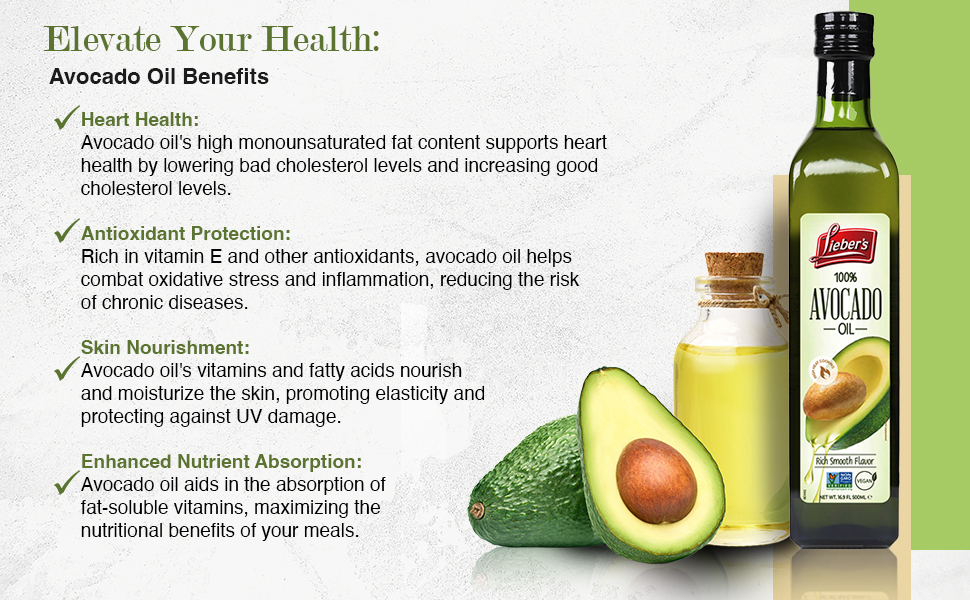
Avocado oil has gained significant popularity in recent years due to its unique flavor profile and numerous health benefits. This versatile oil is extracted from the fruit of the avocado tree and is classified as a vegetable oil. From salad dressings to high-heat cooking, avocado oil offers a wide range of culinary applications. In this article, we’ll delve into the benefits, uses, and culinary applications of avocado oil, exploring why it has become a staple in many kitchens.
This comprehensive guide will cover the nutritional profile of avocado oil, its potential health benefits, and various ways to incorporate it into your diet. We’ll also discuss its suitability for different cooking methods and highlight its high smoke point, making it ideal for searing and frying.
Avocado Oil Benefits
Avocado oil is packed with beneficial nutrients that contribute to overall well-being. It is rich in monounsaturated fats, particularly oleic acid, which has been linked to numerous health benefits. These include:
- Heart Health: Oleic acid can help lower bad cholesterol (LDL) levels and raise good cholesterol (HDL) levels, reducing the risk of heart disease.
- Reduced Inflammation: Avocado oil contains anti-inflammatory compounds that may help alleviate chronic inflammation throughout the body.
- Improved Skin Health: The antioxidants in avocado oil can protect the skin from damage caused by free radicals, promoting a healthy and youthful complexion.
Other Potential Benefits
Beyond its heart-healthy properties, avocado oil also boasts other potential benefits:
- Nutrient Absorption: Avocado oil contains vitamin E, which acts as an antioxidant and may enhance the absorption of fat-soluble vitamins like A, D, E, and K.
- Cognitive Function: Some studies suggest that oleic acid may have a positive impact on cognitive function and memory.
Culinary Uses of Avocado Oil

Avocado oil’s mild flavor and versatility make it suitable for a wide range of culinary applications.
- Salad Dressings: Its rich taste complements the flavors of fresh vegetables in salads, creating a delicious and healthy dressing.
- Marinades: Avocado oil can be used as a base for marinades, tenderizing meat and adding flavor.
- Dips and Sauces: Avocado oil adds richness and creaminess to dips and sauces, enhancing their overall taste and texture.
Baking Applications
While avocado oil is primarily known for its culinary uses, it can also be incorporated into baking recipes:
- Cookies and Cakes: Avocado oil can replace some of the butter or vegetable oil in baked goods, adding moisture and a subtle nutty flavor.
Avocado Oil for Cooking
Avocado oil’s high smoke point makes it an excellent choice for cooking at high temperatures.
- Sautéing and Pan-Frying: Its ability to withstand high heat without breaking down ensures even cooking and prevents the formation of harmful compounds.
- Roasting Vegetables: Avocado oil can be used to roast vegetables, enhancing their flavor and creating a crispy texture.
High Smoke Point of Avocado Oil

The smoke point of an oil refers to the temperature at which it begins to break down and produce smoke. Avocado oil has a high smoke point, typically around 520°F (271°C). This makes it suitable for various cooking methods that require high heat, such as:
- Deep-Frying: Avocado oil’s high smoke point allows it to withstand the high temperatures required for deep-frying without producing harmful fumes.
- Grilling and Broiling: Avocado oil can be used for grilling and broiling meats and vegetables, adding flavor and preventing sticking.
Conclusion
Is avocado oil a vegetable oil? Yes, is avocado oil vegetable oil? Absolutely! Avocado oil is a versatile and nutritious vegetable oil extracted from the fruit of the avocado tree. Its mild flavor, high smoke point, and numerous health benefits make it a popular choice for both culinary and cosmetic applications. From salad dressings to high-heat cooking, avocado oil offers a wide range of uses that can enhance your meals and contribute to your overall well-being.

